Listen on Spotify, Apple Music, and other streaming services.
Listen Now

What Bible On Beat Is
Bible On Beat is a 15-album journey through the entire Bible, told through music. Each album is built like a playlist with roughly 25–35 songs, so the listener isn’t just hearing one theme once. They’re hearing the patterns of God’s Word repeat, deepen, and connect.
God has always used singing to lodge truth in the heart. Scripture calls His people to keep His Word close and pass it on (Deuteronomy 6:6–7). And the New Testament pushes us to let the Word of Christ dwell richly in us through songs that teach and shape us (Colossians 3:16). Bible On Beat is built on that same conviction: truth is meant to live in us, not sit on a shelf.
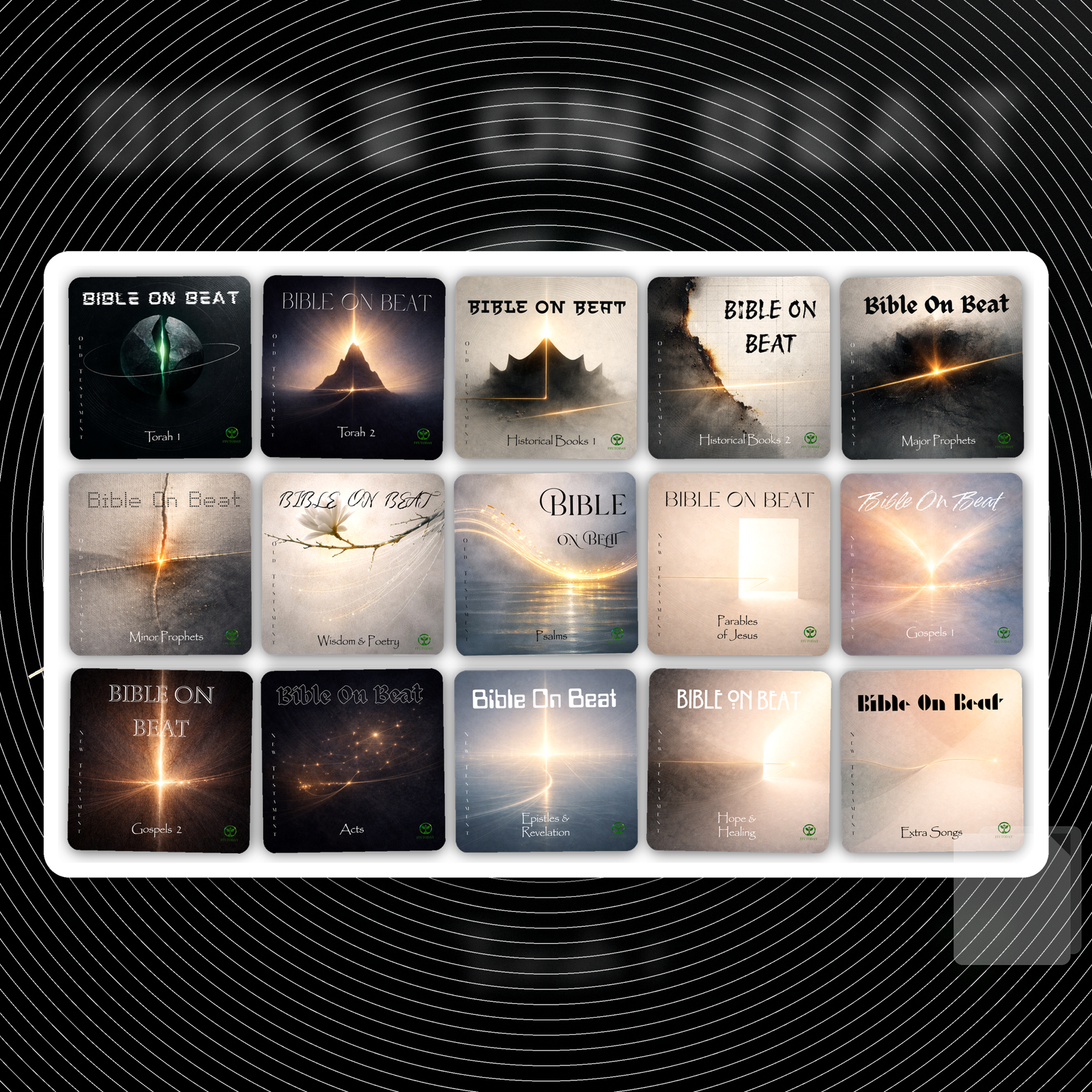
Bible On Beat: Complete Collection
(15-Album Set)
What this complete set includes
15 albums (25–35 songs per album; approx. 375–525 songs total)
 Full lyric book for every song (organized by album + track)
Song-by-song notes (themes, context, and what to listen for)
Scripture reference list for every track (quick verse index by Bible book and by album.
Albums included (15)
Old Testament
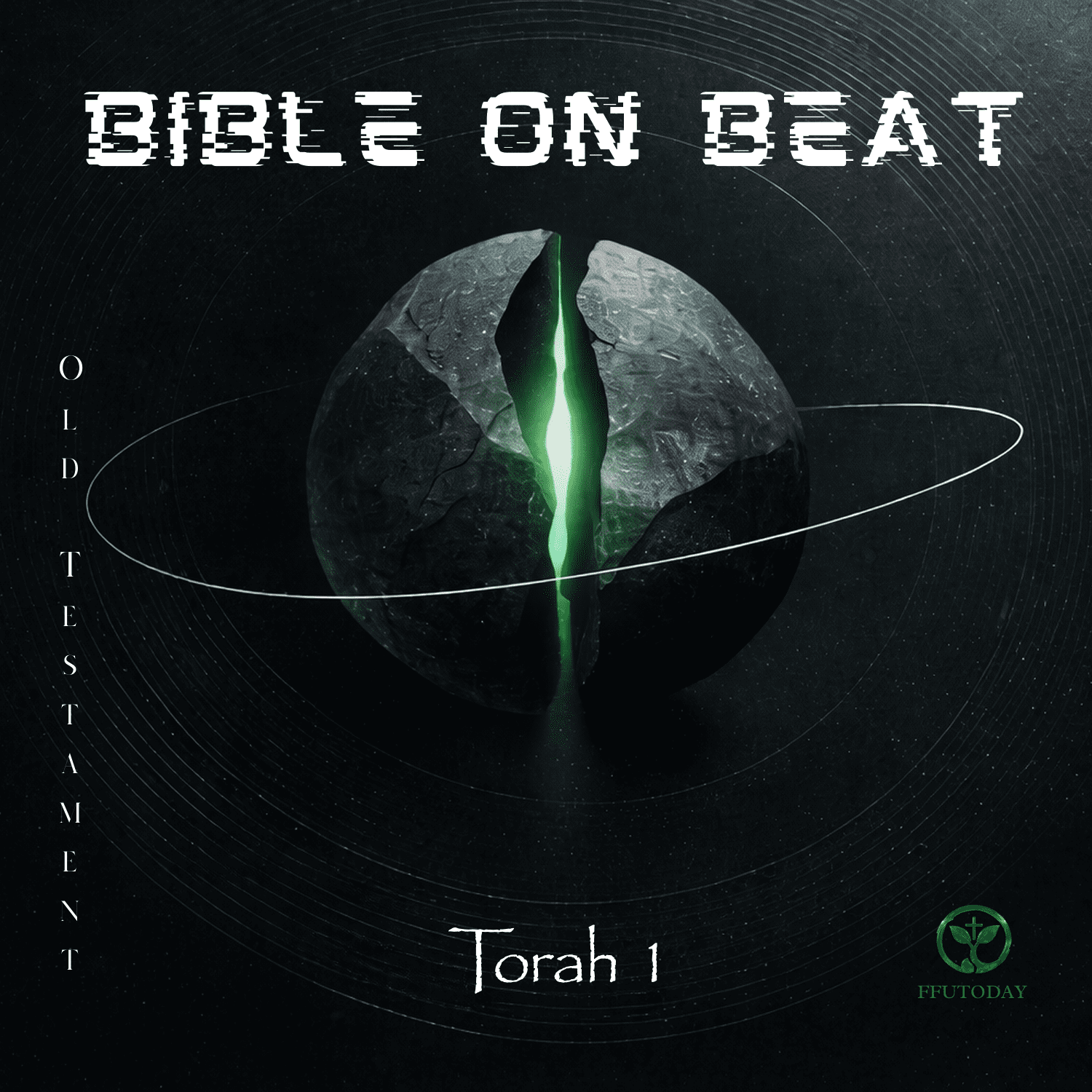
- Torah 1
Focus: Creation, fall, covenant beginnings, early deliverance
Key references: Genesis 1:1–3; Genesis 12:1–3; Exodus 3:14; Exodus 14:13–14 - Torah 2
Focus: holiness, worship, wilderness, covenant renewal
Key references: Leviticus 19:2; Deuteronomy 6:4–9; Deuteronomy 30:19–20 - Historical Books 1
Focus: promise-to-land, conquest, judges, faithfulness in the ordinary
Key references: Joshua 1:9; Judges 21:25; Ruth 1:16–17 - Historical Books 2
Focus: kings, collapse, exile, return, God’s steady hand in history
Key references: 1 Samuel 16:7; 2 Samuel 7:12–16; 2 Kings 17:13–14; Nehemiah 8:10 - Major Prophets
Focus: judgment and mercy, the coming Servant/King, new heart promises
Key references: Isaiah 53:5–6; Jeremiah 31:31–34; Ezekiel 36:26–27; Daniel 7:13–14 - Minor Prophets
Focus: covenant love, repentance, justice, the Day of the Lord, hope beyond ruin
Key references: Habakkuk 2:4; Micah 6:8; Zechariah 9:9; Malachi 4:2 - Wisdom & Poetry
Focus: suffering, wisdom, meaning, love, and reverence
Key references: Job 19:25–27; Proverbs 3:5–6; Ecclesiastes 12:13; Song of Songs 2:16 - Psalms
Focus: worship in every season—lament, repentance, trust, praise
Key references: Psalm 23:1; Psalm 51:10–12; Psalm 46:1; Psalm 119:105

New Testament
- Gospels 1
Focus: the King arrives; the call to follow; the cross-shaped life
Key references: Matthew 11:28–30; Matthew 28:18–20; Mark 10:45 - Gospels 2
Focus: mercy for outsiders, the Spirit’s work, the Word made flesh, belief and life
Key references: Luke 19:10; John 1:14; John 20:31 - Parables of Jesus
Focus: the hidden kingdom, the searching Father, the heart of repentance and mercy
Key references: Matthew 13:10–17; Luke 15:1–7; Luke 10:33–37 - Acts
Focus: gospel expansion, Spirit-empowered witness, the church on mission
Key references: Acts 1:8; Acts 2:42; Acts 4:12 - Epistles & Revelation
Focus: grace, union with Christ, holy living, endurance, final hope
Key references: Romans 1:16–17; Ephesians 2:8–10; 1 Corinthians 15:3–4; Revelation 21:4–5 - Hope & Healing
Focus: comfort for suffering, honest lament, resilient hope, steady promises
Key references: Psalm 34:18; Isaiah 41:10; 2 Corinthians 1:3–4; Revelation 21:4 - Extra Songs
Focus: bonus tracks across the whole Bible’s storyline (creation → new creation)
Key references: Colossians 3:16; Psalm 96:1; Hebrews 12:1–2
Why I Did This
I created Bible On Beat for five reasons, and each is simple yet significant.
1. To glorify God in every kind of sound
God is not honored only by one musical culture. The Psalms contain lament, joy, confession, celebration, and awe. The Bible gives us content and direction for worship, but it doesn’t restrict God’s glory to one sound palette. My goal is to put Scripture’s story on display in a way that’s musically diverse and spiritually serious.
Whether someone prefers heavy beats, soft melodies, cinematic atmosphere, or raw acoustic simplicity, the point is the same: Christ is worthy.

2. To reach more people than one style ever could
Not everyone will sit down and read Genesis on a Tuesday night. But many will listen to music on the way to work, while cleaning, while driving, while trying to survive another day.
So Bible On Beat is intentionally written so that there will be something that catches the attention of almost anyone. And when the music catches them, the message comes with it.
These songs aren’t always word-for-word Scripture, but the key storyline, doctrine, and lessons are woven into the lyrics so listeners can recognize what the people in the Bible went through and see how close it is to our own struggles.

3. To widen hearts, not just playlists
This part matters more than people expect.
A narrow taste in music often mirrors a narrow comfort zone in life. We cling to what feels familiar, and we avoid what feels different. But Jesus did not live that way.
He didn’t build His life around the spiritually polished. He went to the outcast, the sinner, the unwanted, the ignored. He ate with the people others avoided. He moved toward the broken (Luke 5:31–32).
So yes, the genres are mixed on purpose.
 Not to force anyone to like everything, but to train us to stop acting like “different” automatically means “not for me.” If we want a mind like Christ, we have to learn how to welcome people we wouldn’t naturally choose, and one of the simplest places to practice that humility is with the things we consume for comfort.
And on the outreach side, different sounds can reach different people. A genre that a believer might dismiss could be the very doorway God uses to get a skeptical listener to pause long enough to hear something true.

4. To help people remember Scripture’s story, not just isolated lines
There is a kind of memorization that can still leave us spiritually shallow. You can repeat words and still miss the point.
Paul warns about a kind of speech that becomes empty noise when it’s disconnected from love and truth living inside you (1 Corinthians 13:1). The goal here isn’t to produce people who can quote a lyric and feel accomplished.
The goal is to embed the Bible’s story into memory so deeply that it comes back up when life hits. So that the Holy Spirit uses what you’ve heard to convict, comfort, and guide (John 14:26).

5. To turn “reading the Bible” from a chore into hunger
If we’re honest, many Christians treat Scripture like homework. And we do it because we know we should. But the Word of God was not given as a burden. It was given as life.
So Bible On Beat is designed to spark curiosity. To make people want to open the Bible and say, “Where is that in Scripture?” and “What happens next?” and “Who is speaking here?”
If these songs don’t lead you back to the Bible, they’ve missed their purpose.
Every release is meant to be a piece of one larger story that keeps pointing in the same direction: toward Christ, toward Scripture, toward spiritual maturity.

A Clear Note About A.I.
These songs were created using the latest AI technology, with significant hands-on writing, editing, shaping, and production work by me. AI assisted the process, but it did not replace discernment, responsibility, or theological intent.  A lot of people feel uneasy about AI, and some of those concerns are understandable. But many fears come from treating AI like something alive, something independent, something with spiritual authority.
It isn’t.
AI is a tool. Like a microphone, like a camera, like a printing press, like a recording studio. Tools can be used for good or for evil. The moral question is never “does the tool exist?” but “who is using it, for what purpose, under what authority?”
Christ commanded His church to make disciples of all nations (Matthew 28:18–20). And Scripture reminds us that faith comes through hearing the Word of Christ (Romans 10:14–17). In a world saturated with media, believers should not be timid about using modern tools to proclaim ancient truth. We should be careful. We should be honest. We should be discerning. But we should not be paralyzed.

This project is an example of using modern tools to serve an unchanging message.
Without the use of AI, this project would have been nearly impossible to bring to life at this scale and pace. Producing 15 albums with 25–35 songs each across many different genres would normally require a full team of songwriters, composers, session musicians, vocalists, mix engineers, mastering engineers, studio time, equipment rentals, and a production budget that most independent creators simply don’t have. It would also take years of coordination, scheduling, revisions, and repeated recording sessions just to complete a fraction of what this project is aiming to release.  AI doesn’t replace the purpose, the message, or the responsibility behind the work, but it does make the workload and cost realistic by accelerating composition, arrangement, sound design, and draft production so the time and energy can be focused on shaping each song’s story, refining lyrics, ensuring theological clarity, and polishing the final output. In that sense, AI has made it possible to do what would normally take far more money, far more people, and far more years than one person could reasonably carry.
Listen When It Drops
When Old Testament Torah 1 releases next week, I want you to do one thing: listen with your Bible nearby.
Let the songs remind you of the story. Let them push you back into the text. Let them expose where you’ve grown cold. Let them encourage you where you’ve been weary. Let them lift your eyes to the God who speaks, saves, keeps His promises, and does not let His people go.
You’ll be able to find it on Spotify and other major streaming platforms through DistroKid distribution.
This is the beginning of Bible On Beat. And my prayer is simple: that God would use it to put His Word back into the ears, minds, and lives of people who desperately need Him.

All glory to Jesus Christ, our Savior and Lord.