
Salvation by works?
Saving faith may result in good works, but good works do not determine our faith. I have met many people claiming to have faith and do good works, but the works are self-generated, self-glorifying, and do not originate from conversion. I’ve also met people who have genuine faith but lack good works. Regardless of their visible works, they profess Christ as Lord and Savior, while struggling with sin and temptations. But my assessment means nothing to the true state of their heart, because what I see is just a moment in time with many variables unknown to me. Only God knows the condition of a person’s heart and will reveal it to the individual for correction and change. It is God who validates their faith. However, those who are still lost attempt to earn salvation through good works, so that they can point to something they have done to demonstrate their worth. Their assurance of salvation is in their own works, and not in Christ’s works. Assurance comes from knowing God, believing in His Son, and trusting in the works of the Holy Spirit, where he takes you. Assurance comes from God alone.
Works do not precede faith, nor should they be a basis for our faith. Just because someone performs good works in accordance with their faith does not mean they have genuine faith. Indeed, faith will result in works of gratitude and love. But works themselves are never the proof or object of faith. Let me rephrase that: Our works do not save us, but our salvation results in works. The works we do post salvation are out of gratitude. Pre-salvation, our works are nailed to the cross of Christ, and we receive His perfect work of atonement. So salvation is in, through, and by Jesus Christ. Salvation is not in our own efforts, through our works, or by our own merits. Salvation belongs to the Lord (Psalms 3:8).
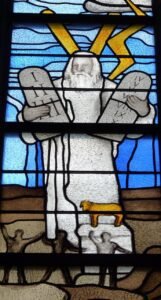
The Laws of God still stand today. The law was not removed or forfeited because Christ fulfilled the law. God’s covenant of works must be fulfilled, either by you or a mediator to stand in your place. To confuse you even more, our salvation is actually based on works because of the Covenant of Works God initiated with our ancestors, Adam and Eve. As our representative, Adam failed to fulfill the covenant and introduced death into the world. The Covenant of Works states that, “you do this and live.” The Law of God was first given to Adam and Eve not to eat from one tree. They broke His law and brought the consequences of disobedience, which is death. Christ establishes a new covenant in the New Testament, known as the Covenant of Grace. God, in His goodness, fulfills the covenant of works Himself and gives us His grace. The Covenant of Grace states that, “He has done it.” Jesus lived perfectly in obedience to God and followed every commandment to the letter. Christ received the judgment for our sins, and we receive Christ’s righteousness. The fulfillment of both Covenants gives us assurance of salvation, because it does not depend on you or what you did, but only on the One who was able to live the life that we could not live, and died the death that we should have died. Jesus took our place, so we can take His place in Heaven.
For many years, I’ve questioned and wondered how works are involved in the salvific process. Only after studying the Bible did I realize that works were not required for my salvation. Understanding this helped me understand the grace of God. To be accepted and saved despite my failed works was a joyous revelation to discover. I experienced a profound emotional moment as a result of that discovery. I would say that was the day I first understood what grace meant. Grace was not something you had to earn, but something that was given to you by God. There were no qualifications or merits required to receive the grace of God. All requirements were fulfilled in Christ. If you believe this, then you are saved. God has forgiven you of all your sins, past, present, and future. You are freed from the powers and penalties of sin. You are in Christ.
Philippians 3:9
“…and be found in him, not having a righteousness of my own that comes from the law, but that which comes through faith in Christ, the righteousness from God that depends on faith.”
However, living fruitlessly and frivolously did not help the new, reborn heart. A lack of work only led to a weakened faith and opportunity for doubt to creep in.

As written in the Book of James, works are needed to confirm the genuineness of faith. Without works, how does one prove their faith (Jam 1:22-25)? But works do not precede faith. Your good acts of righteousness cannot generate genuine faith. Faith comes from God alone and is the gift God gives us to believe in Christ (Eph 2:8-9). Without His faith, we are incapable of believing in Jesus Christ. That may raise a red flag for some readers. Most believers feel that they must choose to believe in Christ in order to be saved, and faith is not given by God but must be self-generated. This was my understanding of how salvation worked. I used to believe my faith had to come from within me, and it was either my understanding of the Word of God or my faith in believing in Jesus. Because of this self-generating faith belief I had, my spiritual walk was always rough, unstable, and even at times stale. I constantly wandered back and forth in my Christian life, which most would identify as a lukewarm Christian. I acted and talked like a believer, yet never felt fully committed to the cross. I felt like an imposter disciple.
Only after understanding that faith originated from God did it help me to finally let go of the last ounce of self-work and pride. I held on dearly as a marker and sign for my salvation, which turned out to be my own work. My faith in Christ became my work attempt to validate my salvation. I made claims that it was due to my faith that I was saved, not Christ’s work of atonement. Christ just made it possible for me to be saved, but I must still have faith to be saved. My hope is that this is clear, as it is very important to understand this distinction. Where your faith originates from determines who you have faith in. If it originates from you, then your faith saved you. If it originates from God, then He saved you. Consider why you believe what you believe.

So your works should result from your faith, and this will be a natural transition. You will begin to desire things of God, and your selfish desires will diminish. Works can be self-produced and self-motivated, but this should only be in the context of post-salvation. The works we produce after being saved in Christ are the Fruits of the Spirit (Gal 5:22-23), but they do not save us.
Works can be deceiving in a sense, because works are signs of genuine faith, but they do not produce faith. Works may validate faith to some, but this can be a mistaken view to hold. Some people are unsure of their faith in Christ; They intentionally work to convince themselves they are part of the fold. Judas would be a good example of someone self-producing works without genuine faith. If you study his life, you will find that he performed the same signs and miracles that the other disciples did. Yet, Judas did not believe Jesus was the Christ. Judas went along with the group, doing the same things and saying the same words, yet inside his heart, he had selfish motives and no faith in the man he was following. His faith was in his works, and not given by God. Judas thought he had faith by his works, but his faith was in his own faith and works, not in Jesus.
If you base salvation on works, then you will be disappointed. Works never produce genuine faith because our works never measure up to God’s standards. Our righteous works are as filthy rags (Isa 64:6). Think of it this way: Would you call a criminal who loves to commit crime at every moment, but for some reason decided to do a good act at one point, would he be justified as righteous? Does the one good act of his own remove all the crimes he committed? Similarly, that one moment you had faith in Jesus because you thought it was rational will not justify all the sins you committed throughout your entire life. Faith does not happen because we willed it or wanted it to happen. A seed cannot plant itself, nor can the ground automatically plant a seed that lands on it. It takes a Farmer to plant the seed of faith in the hearts of humankind. You cannot plant the seed of faith within you. You must wait for the Farmer to plant it. If no genuine seed of faith is planted, then you will either end up weeping over your failure to measure up to God’s standards, or you will become very angry at God for not noticing all the good works you have performed. Sounds a little familiar?

We are all sinners, and our minds are accustomed to obeying sinful orders. We will use our work as a measuring rod to gauge our progress. We only do this because we want to credit ourselves for what we have done. We can see this behavior in children when they bring their new drawing they made in class to their parents. They take pride in their work and want to showcase it. Even though this is a sweet and innocent act, the desire for someone else’s approval of what we did is always there within our hearts since birth. The majority of parents will love their new artwork and stick it on their refrigerator door to display the creativity. It is a proud moment for that child.

Now imagine that same boy has grown up. The grown man has developed many skills and acquired extensive knowledge over the years. He has matured and is now working for a living. He is disciplined and obeys commands very well, yet still has an itch inside for validation of his work. Everyone who produces something wants some sort of validation for their work. Many criticisms and praises may come, but ultimately, it is about their work. Someone who has trained all their life to validate their work finds it challenging to receive the free offer of salvation by God’s grace. Although the desire is genuine, his heart still seeks some assurance that he is on the right track. I know of some people who have a hard time accepting Jesus as Savior because it is a free offer. They felt salvation was not fair, and why should a murderer get to go to heaven just because he believed in Jesus? Free does not sound fair in certain circumstances. We tend to fall down a rabbit hole of questions, asking why this person was saved and why not that person. The hole always ends in self-righteousness or the individual’s abilities. Free salvation may be good for us, but not so much for others. We become the judge of who should be saved and who should not.
This example is intended to reveal the true nature of why we struggle to accept God’s grace. We have been brainwashed to believe that nothing is free in this world. Everything has a price tag, and anyone can be bought with the right amount of money. We live in a world where validation is king. Proof of who they are and what they can do is the goal of life. They walk around with broad shoulders and noses turned up. They walk around with pride because deep inside, they are afraid. They are worried that their lives may not measure up to God’s standards, so they need the validation of their works to prove to God their pious living. The ones who trust in their own works or abilities will not be able to stand before God and use their works as a reason for entry into the Kingdom of God.
We all want to know we are on the right path, but that desire to know is what is holding us back. We must let go of our doubts and believe as God has called us to believe. We are to place our trust in God daily. The emphasis is daily. Salvation is an ongoing process, not in the sense of incompleteness, but rather a process of learning the ways of Christ through His life as described and His life as applied. Still, those who desire to know they are walking with Christ will continually want to point to an event or experience with Christ as a marker. They want validation for their work as payment for their faith. Faith is suddenly not someone to be trusted, but faith is measurable by your good works. Surely they think that Jesus did His part to make a way of salvation, but we must do our part in belief, works, or experience.

Works disappoint and never measure up. Work is what the devil wants you to do. That might sound strange to you, but the devil wants you to do good works. Why? To distract your object of faith, who is Christ. The devil is not dumb. He is a master of sin and knows how to get at the heart of people. He has been tempting humans from the beginning of creation. If the devil had one moment in time to hit hardest with his temptation, it was in the Garden of Eden. He planned and crafted the most clever method to cause the first man and woman to repent from God and turn to themselves. The devil will use Christianity and religion against you to eventually cause you to lose faith. How can that be, you may ask? By not clearly understanding where faith comes from, and who is the One doing the saving. We cannot save ourselves, so salvation must come from an outside source. Those who trust in their works trust in themselves as their own savior.
Does this mean you don’t have to work, or shouldn’t work, since it may cause you to lose faith? Absolutely not! Good works will naturally follow genuine faith. You will not do good works out of your own volition, but by the influence and drawing of the Holy Spirit. You will discover a changed mind, heart, and attitude. You will help and care for people in ways you never have before. Your heart will change to be like Christ.