

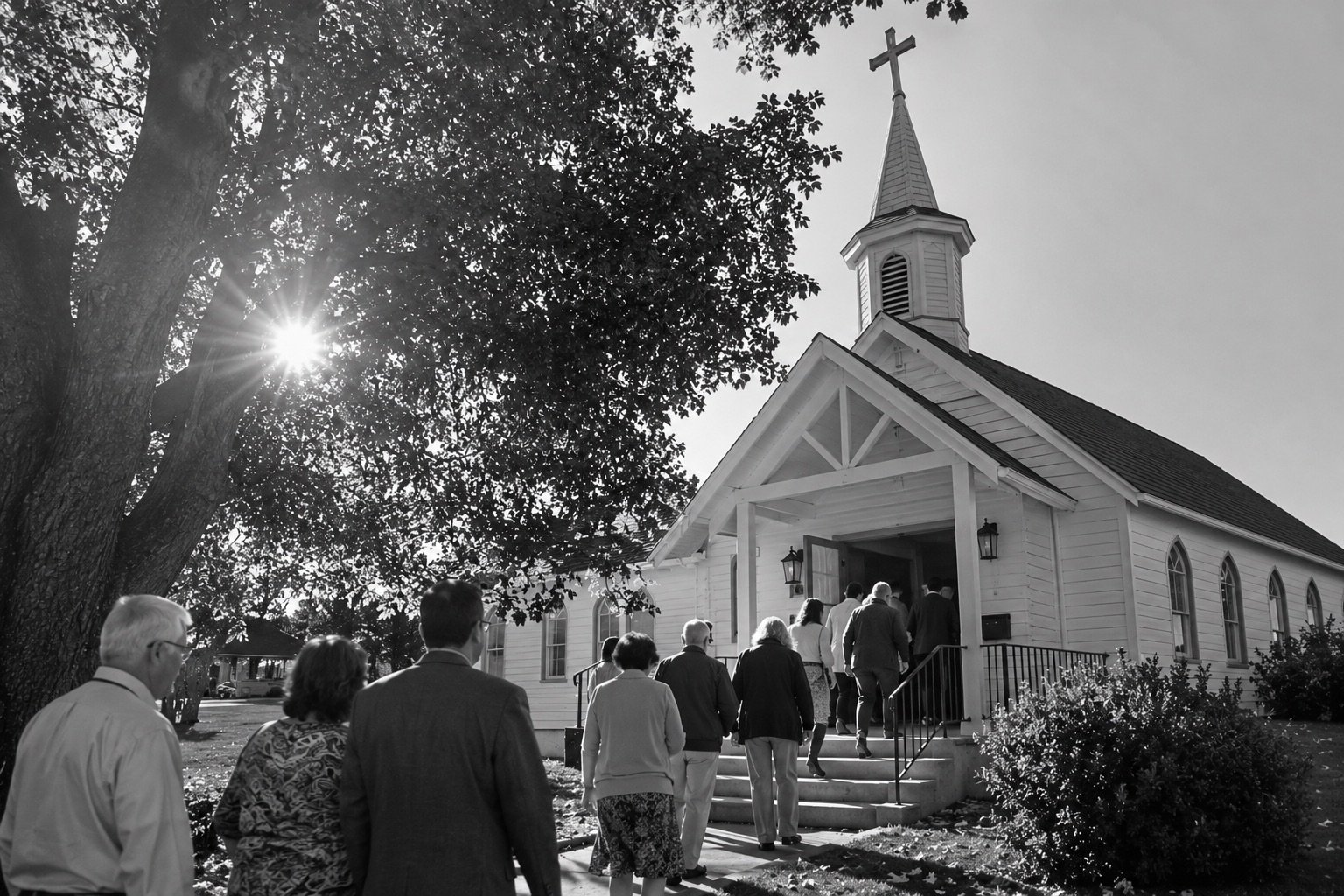
I want you to imagine something for a moment. You have been attending church for several years. You know the pastor, recognize most of the people sitting around you, and occasionally participate in church activities. Every Sunday, you arrive, listen to the sermon, exchange a few greetings, and head home.
Then something happens.
Perhaps you lose your job, your marriage begins falling apart, or you receive news from your doctor that completely changes your life. Suddenly, the things that seemed so important a few weeks earlier no longer matter very much. You are worried, exhausted, and unsure what to do next.
Who do you turn to?
Of course, as Christians, we should turn to God in prayer. We should search the Scriptures for wisdom and encouragement. But have you ever considered that God has also placed people in our lives through whom He intends to encourage, correct, strengthen, and care for us?
I think one of the greatest misunderstandings about Christianity today is the belief that we can live the Christian life entirely on our own. We have become so accustomed to personal independence that we sometimes carry that same attitude into our relationship with God.
We tell ourselves that we can study the Bible at home, listen to sermons online, pray privately, and maintain a perfectly healthy relationship with Christ without becoming meaningfully involved in a local church.
And to be fair, we can learn a tremendous amount through personal Bible study and other Christian resources. I certainly believe those things are valuable. But here is the question we need to ask: Is that how God intended the Christian life to be lived?
When we examine Scripture, we discover something remarkable. God does not simply save isolated individuals and leave them to figure out how to follow Jesus. He brings them into a body of believers who are called to worship, grow, serve, and care for one another.
That is the local church.
And its importance becomes much clearer when we understand that belonging to a congregation is not simply about having somewhere to go on Sunday. It is about participating in a community that Christ Himself has established for the good of His people and the glory of God.
Why We Need One Another More Than We Realize
Let me ask you another question. How well do you really know yourself?
I am not talking about knowing your favorite foods, personal interests, or the things that make you happy. I mean understanding your own weaknesses, sinful tendencies, blind spots, and spiritual needs.
Most of us probably believe we know ourselves fairly well. We recognize some of our weaknesses and have a reasonable understanding of the areas where we struggle.
But what about the things we do not see?
Perhaps we have become impatient with our family, but we justify it because we are under tremendous pressure at work. Maybe we have developed a habit of criticizing other people, but we convince ourselves that we are simply being honest. Or perhaps we have gradually become more concerned with financial success than with our spiritual responsibilities, yet we continue telling ourselves that we are merely working hard to provide for our families.
We can become remarkably skilled at explaining away our own behavior.
That is one reason we need other Christians in our lives.
Hebrews 3:12–13 warns believers about the danger of an evil, unbelieving heart and instructs them to exhort one another so that they are not hardened by the deceitfulness of sin.
Notice that last expression: the deceitfulness of sin.
Sin does not always announce itself as something wicked. Sometimes it presents itself as a reasonable response to difficult circumstances. We become angry and call it righteous frustration. We become proud and call it confidence. We neglect spiritual responsibilities and call it being busy.
And because we cannot always recognize these patterns within ourselves, God has provided the fellowship of other believers.
Imagine a man who has been faithfully attending church for several years. He has a demanding career, a wife, and two children. Over time, his work responsibilities increase, and he begins missing worship services more frequently.
At first, he has legitimate reasons. An important meeting comes up, his work schedule changes, and family activities begin filling the weekends.
Eventually, however, he realizes that he has not attended church regularly in months.
He still considers himself a Christian. He occasionally listens to sermons during his commute and reads a passage of Scripture when he finds the time. But his spiritual life has become increasingly disconnected from other believers.
Now imagine that a close friend from church calls him.
The friend does not begin by accusing him of abandoning God or questioning whether he is truly saved. Instead, he asks how things are going. He listens as the man explains the pressures he has been facing, and then he gently expresses concern.
He reminds him that spiritual growth requires more than occasional private devotion. He encourages him to reconnect with the congregation and offers to meet with him regularly for prayer and accountability.
That conversation may seem insignificant.
But what if God uses that conversation to awaken someone who has been slowly drifting away?
This is part of the purpose of Christian fellowship.
We are not meant to be spiritual spectators who occasionally sit in the same room. We are called to become involved in one another’s lives.
Of course, this requires genuine relationships. Someone cannot meaningfully encourage, correct, or support you if you never allow anyone to know what is happening in your life.
And that can be uncomfortable.
It is much easier to attend a church where nobody asks difficult questions, nobody knows our struggles, and we can come and go without much personal involvement.
But is that really the kind of fellowship Scripture describes?
I do not believe so.
When the Church Becomes the Hands and Feet of Christian Love
There is another reason the local church matters, and I think it is one of the most beautiful expressions of God’s grace toward His people.
Christianity is not simply about what we believe. It also involves how we love.
We can discuss the importance of compassion, generosity, hospitality, and service. We can explain the biblical meaning of these virtues and even memorize passages that teach them.
But eventually, those beliefs need to become visible through our actions.
Consider a family with three young children. The mother is hospitalized unexpectedly and requires several weeks of recovery. The father still needs to work, the children need transportation to school, meals need to be prepared, and ordinary household responsibilities continue piling up.
The family may have relatives nearby who can help, but imagine that they do not.
What would it look like for their local church to respond?
Perhaps one family prepares dinner. Another member offers to take the children to school. Someone helps with grocery shopping, while a few others check in regularly to see whether additional assistance is needed.
None of these things requires extraordinary theological knowledge.
They require love, time, sacrifice, and a willingness to become involved in someone else’s difficulties.
Galatians 6:2 tells believers to bear one another’s burdens and in doing so fulfill the law of Christ.
That is a remarkable command because it assumes that Christians will experience burdens they cannot easily carry alone.
We should never imagine that genuine faith means we will always be strong, independent, and capable of handling everything ourselves.
Sometimes we will be the ones providing assistance.
Other times, we will be the ones who desperately need it.
And I think that second part can be particularly difficult for some of us.
We enjoy being helpful. We appreciate having the ability to provide for others. But admitting that we need help can expose our pride.
Perhaps we do not want people to know that we are struggling financially. Maybe we feel embarrassed about problems in our marriage or believe that asking for assistance demonstrates weakness.
Yet Scripture does not portray the church as a gathering of people who have managed to overcome every difficulty in life.
It portrays the church as a body whose members need one another.
Paul explains in 1 Corinthians 12:26 that when one member suffers, the others suffer together, and when one member is honored, the others rejoice together.
Think about what a congregation would look like if it genuinely practiced that principle.
A young couple welcomes their first child, and the church celebrates with them. An elderly member loses a spouse, and the congregation does not disappear after the funeral. A teenager struggles with questions about faith, and mature Christians take the time to listen rather than dismiss those questions as foolish.
A family experiences financial hardship, and other believers respond with compassion rather than judgment.
These are not merely nice things Christians can do when they happen to have extra time.
They are expressions of what it means to belong to the body of Christ.
And sometimes the most important ministry we provide is simply being present.
When someone is grieving the death of a loved one, we may not have an explanation that makes the pain disappear. We may not know what to say.
But perhaps we can sit beside that person, pray with them, listen, and remind them through our presence that they have not been forgotten.
Christian love does not always require an extraordinary speech.
Sometimes it requires showing up.
We Need the Church Even When Life Is Going Well
One mistake we can make is treating the church primarily as a place to seek assistance during emergencies.
When life is difficult, we appreciate the prayers, encouragement, and support of other believers. But when everything seems to be going well, we may begin to wonder whether we really need much involvement.
After all, the family is healthy, the bills are paid, work is going well, and there are no major problems demanding our attention.
Why not spend Sunday morning doing something else?
The problem with that way of thinking is that spiritual growth is not limited to moments of crisis.
We need God’s Word when life is peaceful just as much as we need it when life becomes difficult.
In fact, prosperity and comfort can sometimes create spiritual dangers of their own.
When our circumstances are comfortable, we may become less aware of our dependence upon God. We gradually begin trusting our abilities, financial resources, and personal plans. Prayer becomes less urgent, worship becomes less important, and our attention shifts toward whatever brings us the greatest satisfaction.
The local church helps remind us of what truly matters.
When we gather for worship, we are drawn away from our ordinary preoccupations and directed toward the glory of God. We hear His Word proclaimed, confess our sins, rejoice in the gospel, and are reminded that our lives belong to Jesus Christ.
Acts 2:42 describes the early believers devoting themselves to the apostles’ teaching, fellowship, the breaking of bread, and prayer.
These were not occasional activities reserved for difficult seasons. They characterized the continuing life of the Christian community.
And they remain essential.
Through the faithful preaching of Scripture, we hear truths that we may not have chosen to study on our own. A pastor may preach a passage that confronts our pride, exposes an unhealthy attitude, or reminds us of a responsibility we have neglected.
We may enter the service expecting encouragement and discover that we also need correction.
And that is not necessarily a bad thing.
God’s Word is intended to teach, reprove, correct, and train us in righteousness, as Paul explains in 2 Timothy 3:16–17.
We need all of those things.
The local church also provides the ordinary setting for baptism and the Lord’s Supper, the sacraments Christ instituted for His people.
In historic Reformed theology, these are not empty religious ceremonies. They are visible signs and seals of God’s covenant promises, through which the Holy Spirit strengthens believers as they receive them in faith.
The Lord’s Supper reminds us that our salvation rests upon the once-for-all sacrifice of Jesus Christ. It calls us to examine ourselves, remember His death, and participate together as members of His body.
Notice that Christian worship is not simply an individual experience.
We gather as God’s people.
We hear His promises together.
We confess our faith together.
And we are reminded that the Christian life is sustained by His grace rather than our own strength.
A faithful local church helps keep these truths before us, not only when we are desperate for help but throughout the ordinary course of our lives.
Accountability Is an Expression of Love
Here is a subject that makes many people uncomfortable: accountability.
We like the idea of belonging to a supportive Christian community. We appreciate encouragement, friendship, and assistance when we are struggling.
But what happens when another believer confronts us about something we are doing wrong?
Suddenly, Christian fellowship can feel much less appealing.
Imagine that you have been involved in a disagreement with another member of your church. Perhaps that person offended you, and rather than addressing the matter directly, you have begun discussing it with several other people.
You explain your side of the story, emphasize how unfairly you were treated, and gradually convince yourself that your behavior is justified.
Then another Christian approaches you privately.
They acknowledge that you may have a legitimate grievance, but they also point out that spreading the conflict through the congregation is not a faithful way to address it.
How would you respond?
Would you thank that person for caring enough to confront you? Or would you become defensive and insist that they have no right to interfere?
I suspect many of us would struggle with that situation.
Nobody enjoys being corrected.
Yet Scripture repeatedly teaches the importance of restoring believers who have fallen into sin.
Galatians 6:1 instructs spiritually mature believers to restore someone caught in transgression with a spirit of gentleness, while remaining watchful over their own conduct.
Notice the balance.
Correction is necessary, but it must be carried out with humility and gentleness.
The goal is restoration, not humiliation.
Jesus also provides instructions in Matthew 18:15–17 for addressing sin within the community of believers. The process begins with an effort to speak privately and seek repentance before involving others when necessary.
These instructions remind us that the church has responsibilities beyond providing encouragement.
It must also care about the spiritual well-being of its members.
But biblical accountability should never become an excuse for controlling people, invading their privacy, or demanding obedience to someone’s personal preferences.
There is a significant difference between confronting genuine sin and attempting to control every decision another Christian makes.
Church leaders are called to shepherd God’s people, not dominate them. First Peter 5:2–3 makes that distinction clear.
Likewise, serious misconduct or abuse must never be concealed under the language of forgiveness or handled in ways that endanger vulnerable people. Churches must respond truthfully, protect those at risk, and involve appropriate civil authorities when necessary.
Healthy accountability operates under the authority of Scripture, with humility, fairness, and genuine concern for the good of others.
And I think we need to remember something else.
Accountability is not merely about having someone confront us when we do something wrong.
It also involves encouraging one another to continue doing what is right.
Hebrews 10:24–25 tells believers to consider how to stir one another up to love and good works, encouraging one another rather than neglecting to meet together.
Sometimes we need someone to remind us of God’s promises.
Sometimes we need someone to help us recognize our spiritual gifts.
And sometimes we need someone who loves us enough to tell us that we are heading in the wrong direction.
All of these are expressions of Christian care.
Every Member Has Something to Contribute
I think one of the unfortunate habits within modern Christianity is the tendency to divide the church into two groups: the people who perform ministry and the people who attend ministry activities.
The pastor preaches, the worship team sings, the elders make decisions, and a small group of volunteers manages everything else.
Everyone else simply shows up.
But is that the picture we find in Scripture?
Not at all.
Ephesians 4:11–16 explains that Christ gives ministers to equip the saints for the work of ministry, so that the body of Christ may be built up toward maturity.
Did you notice that?
The work of ministry is not assigned exclusively to pastors and church leaders.
They are called to equip God’s people so that the whole body can grow and serve.
First Peter 4:10 likewise instructs believers to use the gifts they have received to serve one another as stewards of God’s varied grace.
This means that even someone who does not possess the ability to preach, teach a large class, or lead a ministry organization still has something meaningful to contribute.
Consider an older woman who has followed Christ for most of her life. She may no longer have the physical strength to participate in many activities, but she possesses decades of experience, wisdom, and familiarity with Scripture.
What if she began meeting regularly with a younger woman who was struggling with marriage, parenting, or spiritual discouragement?
She may never stand behind a pulpit.
But her faithful encouragement could profoundly influence another person’s life.
Or imagine a young man who is skilled with computers but has never considered himself particularly useful in church ministry.
Perhaps the congregation has several elderly members who struggle to access online resources or communicate with family members.
He could help them learn to use their devices, access church information, or participate more easily in the life of the congregation.
These may not be glamorous activities.
But they demonstrate practical love.
And that matters.
We should stop imagining that meaningful Christian service must always involve a microphone, a platform, or public recognition.
Much of the church’s most important work happens quietly.
Meals are prepared. Prayers are offered. Children are taught. Lonely people are visited. Discouraged believers receive encouragement. Families receive practical assistance.
Sometimes nobody outside the congregation even knows these things are happening.
But God knows.
And Scripture reminds us that our labor in the Lord is not in vain (1 Corinthians 15:58).
When the church functions as Christ intended, its members become participants rather than spectators.
We begin asking not only what the congregation can provide for us, but also how God might use us to serve His people.
That change in perspective can transform the way we experience church life.
What About Christians Who Cannot Attend Church?
There is an important distinction I want to make because I do not want anyone to misunderstand what I am saying.
Not every Christian who is absent from regular worship has chosen to neglect the church.
Some believers are seriously ill. Others live with disabilities that make attendance difficult. Some are caring for family members who cannot be left alone. Others are homebound or face circumstances that temporarily prevent them from gathering with the congregation.
These situations require compassion rather than careless judgment.
A person who genuinely desires fellowship but cannot attend because of illness is not in the same situation as someone who simply believes that Christian community is unnecessary.
And I think this is where the church has a particular responsibility.
If a member can no longer attend worship, should the congregation simply forget about that person?
Of course not.
Perhaps elders and other members can visit, pray, bring meals, and provide spiritual encouragement. Depending upon a congregation’s circumstances and practices, appropriate pastoral arrangements may also be made to care for those who are homebound.
Technology can be useful here as well. Recorded sermons and streamed worship services can help people who are physically unable to attend remain connected to the teaching and life of their congregation.
But these resources should supplement personal care rather than become an excuse for abandoning it.
Imagine an elderly man who has attended the same church for forty years. He served faithfully, participated in fellowship, and helped support the congregation through difficult seasons.
Now his health has declined, and he can no longer leave his home easily.
Does his relationship with the church suddenly become less important?
Not at all.
In fact, this may be the season when he most needs the love and attention of his fellow believers.
A congregation that understands Christian fellowship should not measure a person’s value by how frequently they can appear in the building or how much physical work they can perform.
We belong to one another in Christ.
And that commitment should remain meaningful even when age, illness, or disability changes how someone participates.
The Local Church Is Not Perfect, but It Is God’s Gift
Let me address one final reality.
If you remain involved in a local church long enough, someone will eventually disappoint you.
Perhaps a pastor will make a poor decision. A fellow member may say something hurtful. Someone you trusted might fail to keep a commitment.
And if we are being honest, there will probably be times when we are the ones who disappoint others.
Why?
Because churches are filled with sinners.
Even among those who have been redeemed by Christ, sanctification remains an ongoing work of the Holy Spirit. We still struggle with pride, selfishness, impatience, and other sinful attitudes.
But I think this should change how we approach the imperfections of ordinary congregational life.
We should not expect perfection from people who are still being transformed by grace.
At the same time, we should not use human imperfection as an excuse for tolerating false teaching, corruption, abuse, or leaders who refuse accountability.
There are legitimate reasons to leave a church, and seeking a biblically faithful, safe congregation can sometimes be necessary.
The point is not that Christians should remain in every church regardless of its condition.
The point is that we should not abandon the importance of the local church simply because relationships require patience and people sometimes fail.
Think about your own family.
Families experience disagreements, disappointments, and difficult seasons. Yet healthy family relationships are not meant to be discarded whenever someone becomes inconvenient.
We work through problems, seek forgiveness, learn to communicate, and continue caring for one another.
The local church is not identical to an earthly family, but Scripture repeatedly describes believers as members of God’s household.
And perhaps one reason God places us among imperfect people is that He intends to teach us to love in ways that cannot be learned through theory alone.
It is easy to talk about patience.
It is more difficult to remain patient with someone whose personality irritates us.
It is easy to discuss forgiveness.
It is more difficult to forgive someone who has genuinely wronged us.
It is easy to praise generosity.
It is more difficult to give our time or resources when doing so interferes with our plans.
Yet these are precisely the circumstances in which the Holy Spirit continues His sanctifying work.
The local church is not simply where Christians gather after they have become spiritually mature.
It is one of the places where God helps them grow toward maturity.
And that is something we should value.
We Were Never Meant to Walk Alone
Let me return to the situation I described at the beginning.
Life is going well, and attending church feels like one activity among many. Then the unexpected happens. You lose your job, receive devastating news, or find yourself facing a problem that seems impossible to overcome.
Suddenly, the importance of genuine Christian fellowship becomes much clearer.
You need people who will pray with you.
You need someone who will remind you of God’s promises when fear begins controlling your thoughts.
You may need practical assistance, wise counsel, or a fellow believer who is simply willing to sit beside you while you grieve.
And sometimes you will need someone to confront you lovingly when your decisions are leading you away from obedience to Christ.
But here is something I do not want us to overlook.
The local church is not important only because of what it can provide when we need help.
It is important because Jesus Christ has called His people together.
He is the head of the church. He is the Savior who purchased His people through His blood. And He continues nourishing, sanctifying, and building His church according to His gracious purposes.
In Ephesians 5:25–27, Paul reminds us that Christ loved the church and gave Himself up for her, with the purpose of sanctifying and presenting her in holiness.
Think about the significance of that passage.
The church is not merely a human institution that Christians happened to establish because they enjoyed gathering together.
It is a people dearly loved by Jesus Christ.
And if Christ loves His church, should we not learn to love it as well?
Not because every congregation is impressive. Not because every pastor is gifted in the same way. And certainly not because every member is easy to get along with.
We love the church because it belongs to our Savior.
So I would encourage you to examine your relationship with your local congregation.
Are you simply attending services, or are you beginning to develop meaningful relationships with other believers?
Do you know the people sitting around you? Do you have Christian friends who can encourage you, pray for you, and speak honestly when you need correction?
Are you using the abilities and opportunities God has given you to serve others? And when you are struggling, are you willing to let other believers care for you?
These are not questions intended to make anyone feel guilty for failing to participate in enough church activities.
They are meant to remind us that Christian fellowship is one of God’s gracious provisions for our spiritual growth.
We need the preaching of His Word. We need prayer, worship, and the sacraments. We need biblical accountability, loving correction, encouragement, and opportunities to serve.
And we need one another.
Not because another Christian can replace Jesus Christ or because belonging to a church can earn our salvation. Only Christ can save us, and our acceptance before God rests entirely upon His finished work.
But the Savior who saves us also joins us to His body.
He calls us to walk together as people who have received the same undeserved grace.
And perhaps that is the beauty of the local church that we sometimes fail to recognize.
It brings together people from different backgrounds, personalities, experiences, and stages of life. People who might otherwise have very little in common discover that they belong to one another because they belong to Jesus Christ.
We worship together, struggle together, rejoice together, and help carry one another’s burdens.
And through all of it, God continues working in us, shaping us more and more into the likeness of His Son.
The Christian life was never intended to be lived alone. God has graciously given us the local church, not simply as a place to attend, but as a people with whom we can grow in faith, demonstrate His love, and glorify Jesus Christ together.