

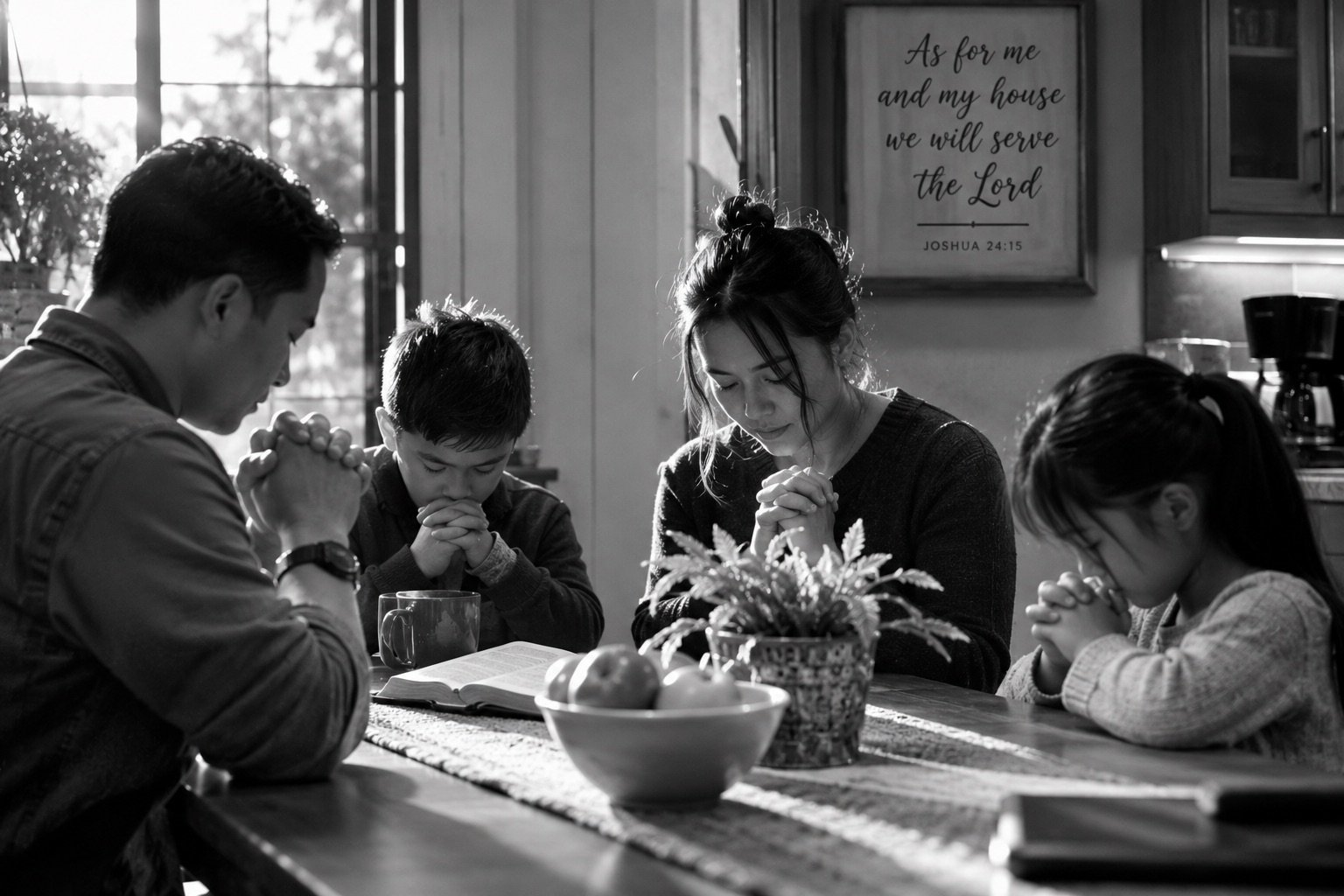
Have you ever reached the end of a long day and wondered what you actually accomplished? You woke up, went to work, took care of your responsibilities, came home, prepared dinner, cleaned up, and somehow found yourself getting ready to do it all over again tomorrow. Nothing particularly exciting happened. You didn’t change someone’s life, accomplish anything extraordinary, or experience some remarkable spiritual moment.
It was just another ordinary day.
And if we are being truthful, sometimes those ordinary days can make us feel as though we are not doing very much with our lives. We see other people accomplishing impressive things, starting ministries, traveling around the world, or doing something that seems genuinely meaningful. Meanwhile, we are trying to keep up with the bills, finish our work, take care of our families, and find a few minutes to rest.
But let me ask you something. Who decided that faithfulness to God must always involve doing something extraordinary?
Think about it. Most of us will never preach to thousands of people. We will probably never write a famous theological book, become a missionary in a distant country, or have our names remembered by future generations of Christians. And there is nothing wrong with that.
Yet sometimes we behave as though those are the kinds of activities that truly matter to God, while the ordinary responsibilities filling our days are somehow less important.
I think we need to reconsider that assumption.
Scripture does not present faithfulness as something reserved for people with impressive abilities, public ministries, or extraordinary opportunities. In fact, much of what God calls His people to do takes place in circumstances so ordinary that nobody else may even notice.
A mother patiently caring for a sick child. A custodian cleaning an empty school after everyone has gone home. A young adult helping an aging parent manage everyday responsibilities. A worker completing an assignment carefully even though nobody is checking the results.
These are not necessarily the kinds of activities that attract public recognition. But does that mean they are unimportant?
The apostle Paul writes in 1 Corinthians 4:2 that stewards are required to be found faithful. In its immediate context, Paul is speaking about those entrusted with the mysteries of God and their responsibility before the Lord. Yet the principle of faithfulness in what has been entrusted to us reaches into many areas of the Christian life.
God has given us responsibilities, opportunities, relationships, and resources. And while those things may differ considerably from one person to another, we are called to exercise faithful stewardship over what He has placed in our care.
Perhaps we have been looking for opportunities to do something great for God while overlooking the responsibilities He has already given us.
The Work Nobody Sees
Imagine a school custodian arriving for work late in the afternoon.
The students have already gone home. Teachers are finishing their paperwork, and the hallways are gradually becoming quiet. The custodian begins emptying trash cans, cleaning classrooms, wiping down tables, and preparing the building for another school day.
The work is repetitive. Tomorrow, the trash cans will be full again. The floors will become dirty, and the tables will need to be cleaned.
There is no final moment when the work is permanently finished.
Now, imagine that this custodian is a Christian who genuinely desires to honor God.
Does the ordinary nature of the work make it spiritually insignificant?
I would argue that it does not.
We tend to divide life into activities that seem spiritual and activities that seem ordinary. Teaching a Bible study is spiritual. Preparing a church service is spiritual. Reading Scripture and praying are spiritual.
But cleaning a classroom? Repairing a broken pipe? Preparing a meal? Working through another stack of paperwork?
We sometimes treat these responsibilities as merely necessary tasks that interrupt the more meaningful parts of life.
Yet Scripture gives us a much broader understanding of what it means to live before God.
In 1 Thessalonians 4:11–12, Paul encourages believers to aspire to live quietly, mind their own affairs, and work with their hands. His instruction concerns a life of responsibility and proper conduct, one that reflects well upon the Christian community.
Notice how ordinary that sounds.
Paul does not tell every believer to become a public religious figure. He encourages them to live responsibly, attend to their obligations, and conduct themselves honorably.
That should cause us to think differently about our daily work.
The custodian who cleans a classroom carefully is helping provide a safe and orderly environment for children and teachers. The mechanic who repairs a customer’s vehicle properly is serving someone who depends upon that vehicle. The person responsible for processing payroll is helping ensure that employees receive the compensation they have earned.
These activities may not appear religious, but they involve real responsibilities toward other people.
And the way we fulfill those responsibilities matters to God.
Of course, simply performing a job does not automatically make every action righteous. Our motives matter, and the work itself must be consistent with God’s commands. A person cannot justify dishonest or harmful behavior by claiming to perform it diligently.
But when we undertake legitimate work with integrity, gratitude, and a desire to serve God and others, even ordinary labor can become an expression of faithful Christian stewardship.
We should not measure the spiritual significance of our responsibilities solely by how visible or impressive they appear.
Sometimes faithfulness means doing the same necessary task for the thousandth time, even when nobody thanks us for it.
The Difference Between Doing Something and Doing It Faithfully
There is a difference between completing a responsibility and fulfilling it faithfully.
Let me explain what I mean.
Suppose you work in an office and are responsible for reviewing documents before they are submitted. You have completed this task hundreds of times, and most days the work is straightforward.
One afternoon, you notice a small error.
Correcting it will require additional time. You are already tired, you want to go home, and there is a good chance nobody will notice the mistake.
So what do you do?
You could ignore it and tell yourself that the error is insignificant. You might reason that the person reviewing the document should have caught it earlier, so it is not really your responsibility.
Or you could take the necessary time to correct the problem.
Now, I am not suggesting that every minor mistake requires us to become perfectionists who can never finish our work. That would create an entirely different set of problems.
But the situation raises a question about our character.
Are we willing to do what is right when doing so is inconvenient?
And are we willing to be responsible even when our efforts will never receive recognition?
Jesus addresses the relationship between smaller responsibilities and greater ones in Luke 16:10. In the context of teaching about stewardship and faithfulness with material possessions, He explains that faithfulness in little matters is related to faithfulness in much.
That principle should challenge the way we think about our daily responsibilities.
We sometimes imagine that we would be extraordinarily faithful if God entrusted us with something important. We tell ourselves that if we had more money, we would become more generous. If we had more influence, we would use it for good. If we were given a leadership position, we would demonstrate integrity and wisdom.
But what are we doing with the responsibilities we already have?
If we are careless with small financial obligations, why assume that greater wealth would automatically make us responsible stewards?
If we repeatedly break minor commitments, why imagine that we would suddenly become dependable when entrusted with something more significant?
Our everyday choices reveal habits, priorities, and motivations that are already developing within us.
And those habits do not appear overnight.
They are cultivated through repeated decisions.
That is why ordinary moments matter.
Not because every small decision will lead to some extraordinary future opportunity, but because faithfulness is worth pursuing regardless of whether anyone notices or rewards it.
We should be faithful because we belong to Jesus Christ.
When Doing the Right Thing Interrupts Our Plans
Here is another situation that I think many of us can relate to.
You finally have an evening to yourself. The week has been exhausting, your responsibilities are finished, and you are looking forward to relaxing.
Then your phone rings.
It is a friend who has been going through a difficult time. They need someone to talk to, and you can tell from their voice that something is wrong.
You look at the clock.
You were hoping to get to bed early. You have already spent the entire day dealing with other people’s problems, and the last thing you want is another long conversation.
What should you do?
Now, before we go any further, let me clarify something. Christians are not required to make themselves available to every person at every moment. We are finite human beings. We need sleep, rest, and appropriate boundaries. There are times when the wisest response is to arrange another time to talk or help someone find more suitable assistance.
But there are also moments when love calls us to set aside our preferences and give attention to another person’s needs.
And those moments can reveal something important about our hearts.
We may sincerely believe that Christians should love one another. We may even discuss the importance of compassion and fellowship in church.
But how do we respond when demonstrating that love becomes inconvenient?
The apostle John writes in 1 John 3:17–18 about the inconsistency of claiming to possess God’s love while closing our hearts against someone in need. He then directs believers toward love expressed through genuine action.
That is a sobering passage.
It reminds us that Christian love is not merely an emotion or an admirable idea.
It is something we are called to demonstrate.
Perhaps your friend does not need you to solve their problem. Maybe they simply need someone who will listen patiently without immediately trying to explain why everything happened.
Perhaps an elderly neighbor needs help carrying groceries, or someone at church needs transportation to an appointment.
These situations may seem too ordinary to have much spiritual significance.
But consider how often Jesus directed attention toward people whom others overlooked.
In John 13, Jesus washed His disciples’ feet, taking upon Himself a task associated with humble service. Afterward, He instructed them to follow His example.
The Lord of glory did not consider Himself above serving others.
Think about that.
If Jesus Christ demonstrated humility through an ordinary act of service, why should we imagine that serving others in ordinary ways is somehow beneath us?
Of course, our acts of kindness cannot compare with Christ’s unique saving work. He alone accomplished our redemption through His obedience, death, and resurrection.
But His humility provides an example for how His redeemed people should treat one another.
Sometimes the opportunity to serve God is not something we planned to do.
Sometimes it is the interruption we were hoping to avoid.
The Quiet Faithfulness of Ruth
One of my favorite biblical examples of ordinary faithfulness is found in the book of Ruth.
When people think about the great events of Scripture, they often remember dramatic moments. Moses confronting Pharaoh. Elijah calling down fire from heaven. David defeating Goliath.
These are extraordinary accounts of God’s work in history.
But the story of Ruth unfolds through circumstances that seem much more familiar to ordinary life.
Ruth is a Moabite widow who chooses to remain with her widowed mother-in-law, Naomi. Both women face an uncertain future, and they return to Bethlehem without the security they once possessed.
Ruth does not arrive with a grand plan to become an important figure in Israel’s history.
She needs to find food.
So she goes into the fields to glean grain left behind by the harvesters.
Think about how ordinary that is.
She is not leading an army, preaching to thousands of people, or performing an extraordinary miracle. She is gathering food so that she and Naomi can survive.
Yet through these ordinary events, God is working according to His providential purposes.
Ruth enters a field belonging to Boaz, a man who demonstrates generosity and concern toward her. As the account develops, Boaz acts as a family redeemer, and their marriage eventually becomes part of the family history leading to King David.
And through David’s line, Jesus Christ would later come into the world.
Now, we need to be careful not to draw the wrong conclusion from this account.
The book of Ruth is not promising that every ordinary act of faithfulness will eventually lead to something extraordinary that we can recognize during our lifetimes.
That would miss the point.
Rather, the account shows how God’s providence operates through ordinary circumstances, human responsibilities, and seemingly unremarkable events.
Ruth’s loyalty to Naomi matters. Boaz’s treatment of Ruth matters. Their actions unfold within the larger purposes of God, even though they do not possess complete knowledge of what He is accomplishing.
And that is something worth considering.
We rarely know how God will use the ordinary details of our lives.
A conversation with a struggling friend may provide encouragement at precisely the moment it is needed. A parent who patiently teaches a child the Scriptures may never see all the ways those lessons influence that child’s future.
A Christian who faithfully serves a small congregation for decades may never become widely known, yet that person’s care may strengthen generations of believers.
We do not need to know every outcome before deciding whether obedience is worthwhile.
God has not called us to control the future.
He has called us to trust Him and be faithful with what He has placed before us.
The Danger of Wanting to Be Noticed
There is something else about ordinary faithfulness that we need to address because I think it exposes a weakness many of us share.
We like recognition.
Now, there is nothing necessarily wrong with appreciating encouragement or receiving thanks for something we have done. It is good to acknowledge the contributions of others.
But what happens when recognition becomes the reason we serve?
Imagine someone volunteering at church.
They regularly arrive early, help organize activities, and stay afterward to clean up. They invest considerable time and effort in serving the congregation.
Then one Sunday, the pastor publicly thanks several volunteers but forgets to mention this particular person.
Suddenly, the volunteer becomes offended.
Perhaps they begin wondering why they bother helping when nobody seems to appreciate their efforts.
Now, I can understand the disappointment. People should be encouraged, and church leaders ought to recognize the contributions of those who serve.
But the situation also raises an important question.
Were we serving because we wanted to honor God and help His people, or because we wanted other people to recognize what we were doing?
Sometimes the answer may be a mixture of both.
And that is precisely why we need to examine our motives.
Jesus addresses this issue in Matthew 6:1–4 when He warns against practicing righteousness for the purpose of being seen and praised by others.
In the immediate context, He is speaking about giving to those in need. His warning concerns the temptation to turn a righteous activity into an opportunity for personal glory.
That principle reaches into many areas of Christian living.
It is possible to do something outwardly good while being motivated primarily by pride.
We may give generously because we want others to admire us. We may volunteer because we enjoy being regarded as dependable. We may offer assistance because we expect gratitude or a future favor in return.
But would we still do those things if nobody ever knew?
Would we remain faithful if nobody publicly thanked us?
Would we continue serving if someone else received the recognition?
Those questions can reveal a great deal about our hearts.
And I think they are especially relevant in a culture that constantly encourages us to make our lives visible.
We take pictures of our accomplishments, announce our activities, and share our experiences with an audience. There is nothing inherently wrong with documenting meaningful events or allowing others to celebrate with us.
But we should be careful not to measure the value of our lives by how much attention they receive.
Some of the most meaningful acts of Christian faithfulness will never be photographed, announced, or publicly acknowledged.
A person quietly giving financial assistance to someone who is struggling. A husband caring for his wife through years of illness. A church member faithfully praying for people who may never know they are being prayed for.
These acts may remain hidden from the world.
But they are not hidden from God.
And the God who sees in secret is worthy of our obedience whether anyone else notices or not.
Faithfulness Is Not the Same as Constant Productivity
There is another misunderstanding I want us to avoid.
When we talk about being faithful in ordinary responsibilities, some people may assume that Christians should always be busy accomplishing something.
Every hour must be productive. Every moment must be used efficiently. Every responsibility must be completed perfectly.
And when we become tired or fail to accomplish everything on our schedules, we begin feeling guilty.
But that is not what Scripture teaches.
Faithfulness is not the same as constant activity.
We are creatures with limitations. We need sleep, nourishment, recreation, and rest. We also need time to worship God, cultivate relationships, and care for our physical and emotional well-being.
God did not create us to function as machines.
Consider a single parent working full-time while caring for young children. Each day involves preparing meals, getting children to school, fulfilling work responsibilities, managing expenses, and maintaining a household.
By the end of the evening, that parent may be completely exhausted.
Imagine telling this person that they are not being faithful because they have not volunteered for more church activities, taken on additional projects, or accomplished enough visible ministry work.
Would that be a fair application of Scripture?
Not necessarily.
Perhaps faithfulness in that season means attending carefully to the responsibilities already entrusted to them, seeking appropriate help, maintaining fellowship with the church as circumstances allow, and recognizing that their limitations do not make them spiritually inferior.
Sometimes obedience involves saying no to a worthwhile opportunity because accepting it would cause us to neglect more important responsibilities.
Sometimes it involves taking time to rest rather than continuing to work simply because we are afraid of disappointing people.
And sometimes it requires acknowledging that we cannot do everything.
That kind of humility can be difficult, particularly for people who are accustomed to measuring their worth by their accomplishments.
But the Christian life is not a competition to see who can remain the busiest.
Our worth before God does not come from the number of tasks we complete.
It comes from belonging to Jesus Christ.
Our responsibilities matter, but they are not our savior.
And we should never allow the pursuit of faithfulness to become another form of self-righteousness in which we measure our acceptance before God by our performance.
Ordinary Faithfulness Depends Upon Extraordinary Grace
This brings us to something I believe is essential.
If we are not careful, an article about everyday faithfulness can become little more than a collection of moral instructions.
Be responsible. Work hard. Help others. Keep your promises. Remain humble. Fulfill your obligations.
Those are worthwhile principles.
But Christianity is not simply a religious program designed to turn us into more disciplined and respectable people.
We need something far greater than moral improvement.
We need Jesus Christ.
The truth is that none of us has been perfectly faithful with the responsibilities God has given us.
We have neglected opportunities to help others. We have sometimes acted selfishly, become careless in our work, or placed our personal comfort above our responsibilities. Even when we have done the right thing outwardly, our motives have not always been pure.
And if God’s acceptance depended upon the consistency of our everyday faithfulness, what hope would we have?
Not much.
But that is the beauty of the gospel.
Our salvation does not rest upon our ability to live a perfectly obedient life.
It rests upon the perfect obedience and finished work of Jesus Christ.
In His earthly life, Christ fulfilled the will of His Father without sin. He obeyed where Adam failed and where we continue to fall short. He offered Himself as the sacrifice for sin, rose victorious from the grave, and secured redemption for those who belong to Him.
Through faith in Christ, believers are justified before God, not because their obedience has made them worthy, but because His righteousness is sufficient.
And the same grace that saves us also begins transforming the way we live.
Philippians 2:13 reminds believers that God works within them both to will and to work according to His good pleasure.
That truth should change how we approach our daily responsibilities.
We do not need to pretend that we have everything under control.
We can acknowledge our weaknesses, confess our failures, seek forgiveness, and continue depending upon the Holy Spirit to strengthen us in obedience.
Some days we will respond wisely.
Other days we will recognize that we should have been more patient, more generous, or more willing to listen.
When that happens, we should repent rather than making excuses.
And then we should continue walking with Christ.
Spiritual growth is often gradual. God works through His Word, prayer, the fellowship of His church, and the ordinary experiences of life to expose our sin and cultivate greater holiness.
We may not notice every change immediately.
But over time, a person who once reacted angrily to every inconvenience may begin responding with greater patience. Someone who habitually avoided responsibility may become more dependable. A believer who was constantly concerned about personal recognition may begin finding greater satisfaction in quietly serving others.
These changes do not make us righteous before God.
They are evidence of His grace working within us.
What Will We Do With Today?
Let me bring us back to that ordinary day we considered at the beginning.
You wake up, prepare for work, handle your responsibilities, and return home. Perhaps the day is uneventful. Nobody recognizes anything remarkable about what you have done.
But consider what may have happened along the way.
You kept a promise even though doing so required extra effort.
You treated someone with kindness when you could have responded impatiently.
You completed a responsibility carefully rather than taking an easier but dishonest shortcut.
You gave attention to someone who needed to be heard.
Perhaps you prayed for a friend, helped a neighbor, or fulfilled an obligation that nobody else even knew existed.
None of these things will necessarily become part of some extraordinary testimony.
They may never be remembered by anyone outside the people directly involved.
But does that mean they were insignificant?
I do not believe so.
We often spend so much time thinking about what we hope to accomplish in the future that we overlook the opportunities for obedience right in front of us.
We imagine that one day, when we have more time, more money, fewer responsibilities, or a different set of circumstances, we will finally be able to serve God more faithfully.
But what about today?
What about the people who already depend upon us?
What about the responsibilities we have already accepted?
And what about the opportunities to demonstrate patience, kindness, honesty, and love that arise in the middle of our ordinary routines?
Perhaps we need to stop waiting for life to become extraordinary before taking faithfulness seriously.
That does not mean we should abandon meaningful ambitions or avoid pursuing opportunities God may place before us.
But we should remember that obedience is not something reserved for the future.
It begins with the circumstances in which we find ourselves today.
James 4:13–15 reminds us of the uncertainty of our plans and the importance of recognizing our dependence upon God’s will. We may make plans for tomorrow, but we do not possess ultimate control over what tomorrow will bring.
What we do have are the responsibilities and opportunities God has placed before us in the present.
And those deserve our attention.
There is something deeply encouraging about that truth because it means we do not need extraordinary circumstances to begin living faithfully.
A Christian working in an ordinary occupation can glorify God.
A parent caring for children can glorify God.
An elderly believer whose physical strength has declined can glorify God through prayer, encouragement, and whatever service remains possible.
Even someone confined to a hospital bed can demonstrate faith through trust, prayer, and dependence upon the Lord, though their worth in Christ never depends upon what they are able to accomplish.
The opportunities may differ, but the calling remains the same.
We belong to Jesus Christ.
And because we belong to Him, the ordinary details of our lives are not outside His concern.
So perhaps the next time you finish a long day and feel as though you have accomplished nothing particularly important, you should reconsider what faithfulness actually means.
Did you seek to honor Christ with the responsibilities He gave you?
Did you treat others with love?
Were you willing to repent when you failed?
Did you remember that your life belongs to God, even when nothing extraordinary was happening?
These are not questions intended to turn every moment into an exhausting spiritual evaluation. They are reminders that faithfulness is cultivated through the ordinary rhythms of a life lived in dependence upon God’s grace.
We do not need to be impressive.
We need to be faithful.
And even that faithfulness is not something we produce independently of Christ. It is the fruit of His gracious work within us.
At the end of the day, the Christian life is not measured by how many people know our names, how much attention our accomplishments receive, or whether our responsibilities appear significant to the world.
Our calling is to glorify God in whatever He has entrusted to us.
Sometimes that will involve extraordinary opportunities.
But much more often, it will involve ordinary moments that seem to come and go without anyone noticing.
And perhaps that is where we need to learn one of the most important lessons of the Christian life.
Faithfulness is not primarily about accomplishing extraordinary things for God. It is about trusting and obeying our extraordinary Savior in the ordinary circumstances where He has placed us, knowing that even the smallest act of genuine obedience matters because it is offered to Him.