

Christian Ethics in a Confused Age, Episode 22

Christians can agree completely on the authority of Scripture and still disagree about many decisions in ordinary life. One believer may feel free to participate in something another believer avoids. Families may reach different conclusions about schooling, entertainment, clothing, social customs, celebrations, food, drink, technology, or other practical questions. Sometimes those differences remain small. Other times they become tests of spirituality, and before long people are judging one another over rules God Himself never gave.
The opposite problem appears just as easily. A Christian may understand that Scripture leaves room for liberty and begin treating personal freedom as something that must always be exercised. Anyone who raises a concern is dismissed as legalistic, and the language of Christian liberty becomes protection against correction. What began as freedom from human rules can slowly turn into freedom from wisdom, self-denial, and consideration for the spiritual good of others.
Episode 22 addresses both dangers. Christian liberty is precious because Jesus Christ truly frees His people from the guilt of sin, the condemnation of the law, and the tyranny of man-made religion. Yet that freedom does not make holiness optional. Scripture teaches believers to distinguish carefully between what God commands, what God forbids, and what He leaves to wise judgment. In those disputable matters, conscience matters, but conscience must remain governed by Scripture and shaped by love.
That balance is difficult because we often prefer certainty. A list of rules can feel safer than wisdom, while unrestricted freedom can feel easier than responsibility. The Christian life gives us something better than either. Christ frees the conscience from human bondage while teaching the liberated believer to use freedom for the good of others.
Christian Ethics in a Confused Age, Episode 21
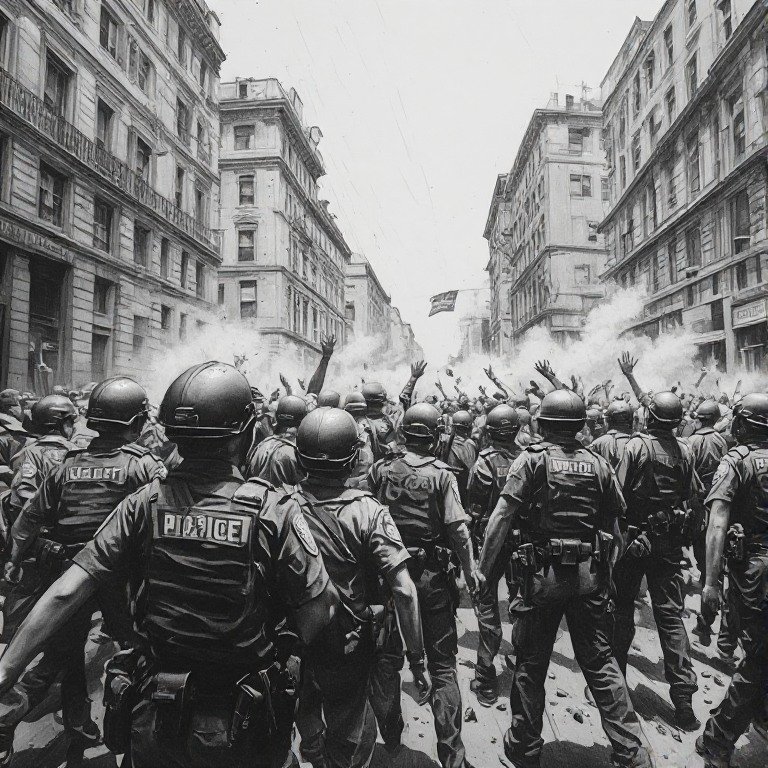
War forces Christians to face moral questions that are difficult precisely because the stakes are so high. Human lives are lost, families are separated, bodies are wounded, communities are shattered, and people who survive may carry the consequences for years. Scripture never gives us permission to become casual about bloodshed. At the same time, the Bible does not describe a world in which violent evil disappears simply because peaceful people refuse to resist it. Christian ethics must therefore take seriously both the horror of violence and the responsibility to protect people from those willing to use violence unjustly.
That tension is at the center of Episode 21. Christians are commanded to reject personal vengeance, love their enemies, pray for those who persecute them, and overcome evil with good. Yet Scripture also describes civil authority as having a responsibility to restrain wrongdoing and protect public order. Those teachings are not identical because they address different callings. The private Christian is not given permission to avenge personal wrongs, while lawful authorities may sometimes be required to use force in order to stop aggression or defend the innocent. The challenge is learning to preserve that distinction without making violence seem righteous merely because someone in authority uses it.
This is why Christian thinking about war should always carry a certain sobriety. There may be circumstances in which force is morally necessary, but necessity should never become enthusiasm. If we begin talking about war as though destruction itself were glorious, something has gone wrong. Peace remains the good toward which we aim, human life retains its dignity even in conflict, and every earthly authority remains accountable to the God who alone judges perfectly.
Christian Ethics in a Confused Age, Episode 20

Politics has a way of making everything feel urgent. Elections are described as turning points from which a nation may never recover. Political victories are celebrated as though history has finally been placed on the right course, while defeats can produce fear that everything good is about to disappear. Christians are not immune to these pressures. We live in real communities under real governments, and political decisions can affect families, churches, schools, businesses, unborn children, the elderly, the poor, victims of crime, and nearly every other part of public life. Pretending politics does not matter would be neither realistic nor responsible.
Yet Scripture gives us an equally important warning: politics cannot bear the weight of our ultimate hope. Government can establish laws, punish wrongdoing, restrain certain forms of evil, protect life and property, and preserve a measure of public order. What it cannot do is forgive sin, regenerate the human heart, reconcile sinners to God, cleanse the conscience, or raise the dead. Episode 20 therefore places Christian political thinking between two serious errors—cynical withdrawal on one side and political idolatry on the other. Civil authority matters because God has given it a real place in a fallen world, but it remains limited because Jesus Christ alone is Lord.
That distinction is increasingly important when politics begins functioning like religion. Political movements can develop their own stories of creation and fall, their own explanation of evil, their own heroes and villains, their own hopes for salvation, and even their own forms of excommunication. Christians can begin speaking about elections with more emotional intensity than they speak about resurrection, treating political allies with a loyalty they should reserve for Christ and political opponents with a contempt Scripture never permits toward neighbors. The answer is not indifference. It is learning to care about public life while keeping political power in its proper place.
Christian Ethics in a Confused Age, Episode 19
Justice has become one of those words almost everyone wants to claim. Politicians use it, activists use it, churches use it, corporations use it, and people across very different moral and political traditions insist that their vision of society represents what justice requires. The difficulty is that using the same word does not mean everyone is talking about the same thing. If justice is separated from a fixed standard of truth and righteousness, it can eventually mean whatever a particular movement, generation, or community wants it to mean.
Scripture gives Christians a different starting point. Justice does not begin with cultural fashion, partisan loyalty, or whatever definition happens to be most popular at the moment. It begins with God. He is righteous and just, and because His character does not change, justice cannot be detached from what He has revealed about good and evil, truth and falsehood, guilt and innocence, mercy and responsibility. Episode 19 builds its entire discussion around this point: biblical justice belongs to neighbor-love, but neighbor-love must remain governed by truth rather than becoming a slogan that can be filled with whatever meaning we prefer.
That distinction matters because Christians can fail in opposite directions. We can adopt the language of justice so quickly that political activism begins defining Christianity for us, or we can become so suspicious of politicized language that we stop taking seriously Scripture’s repeated commands to defend the vulnerable, reject partiality, show mercy, and care about how people are treated. Christian ethics allows us neither escape. We are called to care about justice precisely because God cares about justice, while refusing to let the surrounding culture determine what righteousness means.
Christian Ethics in a Confused Age, Episode 18

Most of us will spend an enormous portion of our lives doing work that very few people will ever consider remarkable. We answer emails, fix problems, prepare meals, drive somewhere, clean something, care for children, balance accounts, teach lessons, repair equipment, attend meetings, stock shelves, treat patients, make deliveries, fill out paperwork, manage a household, or simply keep doing the next necessary thing. Much of ordinary work will never appear in a biography, and most of it will receive little applause.
That can make work feel spiritually insignificant. Christians may know that worship matters, prayer matters, Scripture matters, and serving the Church matters, yet still find themselves wondering what God thinks about the ordinary tasks filling most of Monday through Friday. The danger is that we quietly divide life into sacred and secular categories. Church belongs to God, while work belongs to the world. Ministry feels spiritual, while accounting, construction, caregiving, teaching, farming, administration, or cleaning seem like necessary activities we endure so that we can get back to the things that really matter.
Episode 18 challenges that division at its foundation. Scripture presents work as part of God’s good creation before sin entered the world. The curse brought frustration, exhaustion, futility, and resistance into labor, but it did not create work itself. Human beings were already called to cultivate and keep God’s world. Ordinary labor therefore has dignity because it belongs to our creaturely calling, and it becomes an arena of Christian faithfulness when it is done before God and for the good of our neighbor.
That changes the question we bring to our work. Instead of asking only whether our job is fulfilling, prestigious, highly paid, or visibly important, we can begin asking whether we are being faithful in the work God has placed before us.
Christian Ethics in a Confused Age, Episode 17

Money is one of the easiest things in life to treat as morally neutral. We need it to buy food, maintain a home, pay bills, support a family, prepare for the future, and participate in almost every ordinary part of modern life. Because money is so practical, we can begin thinking of it as nothing more than a tool, as though the only ethical question were whether we obtained it legally and spent it responsibly.
Scripture is much more cautious. It never teaches that money itself is evil, yet it repeatedly warns that wealth has unusual power to expose and redirect the heart. Money can feed the hungry, shelter the vulnerable, support families, strengthen churches, fund acts of mercy, and provide for future needs. At the same time, it can promise security, independence, status, control, and relief from fear in ways that compete directly with trust in God. Episode 17 therefore refuses to treat wealth as either inherently righteous or inherently corrupt. Its concern is what money becomes in the heart of the person who possesses, pursues, fears losing, or envies it.
That is a more searching question than simply asking how much money someone has. A person with very little can be consumed by money, while a person with substantial wealth can receive it gratefully and steward it generously. The amount matters in practical ways, but Christian ethics reaches deeper into allegiance. What does money make us trust? What are we afraid would happen if we lost it? What do we imagine would finally become possible if we had more? Those questions begin revealing whether money remains a servant or has quietly become something closer to a refuge.
Christian Ethics in a Confused Age, Episode 16

Entertainment feels like one of the easiest parts of life to place outside serious Christian reflection. We work, fulfill responsibilities, go to church, care for our families, and then eventually reach the part of the day where we want to relax. A movie, show, game, song, video, book, or some other form of entertainment feels different from the morally serious parts of life because we are not trying to accomplish anything. We are simply enjoying ourselves.
The problem is that our hearts do not stop being formed when we relax. Stories still awaken sympathy. Music still stirs emotion. Comedy still teaches us what deserves laughter. Characters still show us what kinds of lives are admirable, tragic, foolish, or desirable. Images enter memory, scenes return to the imagination, and repeated exposure slowly changes what feels normal. Episode 16 begins from that basic Christian conviction: entertainment is morally serious because the imagination is morally serious. What we repeatedly watch, laugh at, admire, replay, and normalize can shape what we eventually learn to love.
That does not mean Christians should become suspicious of pleasure itself. Scripture gives us no reason to treat beauty, creativity, storytelling, music, craftsmanship, humor, or imagination as enemies. God made a world filled with color, sound, texture, rhythm, beauty, and delight. Human beings create because we were made by a Creator. The Christian question is therefore not whether enjoyment is permitted. The deeper question is what our enjoyments are doing to us.
Christian Ethics in a Confused Age, Episode 15

Most of us do not think of checking a phone, opening an app, watching a video, or scrolling through a feed as an ethical decision. Technology feels ordinary because it has become woven into almost everything we do. We work through screens, communicate through screens, shop through screens, study through screens, and increasingly relax through screens. None of that makes technology inherently wrong. The problem is that something can become ordinary long before we have stopped to ask what it is doing to us.
Episode 15 begins with that concern. Technology is neither a redeemer that will solve the deepest problems of human life nor an independent monster that Christians need to fear. It belongs within the human calling to cultivate, make, organize, and use creation, but because human beings are fallen, our tools can also amplify pride, lust, vanity, restlessness, impatience, and distraction. The Christian question therefore cannot stop with whether a device works or whether a particular technology is useful. We also have to ask what kind of people repeated use is training us to become.
That question becomes especially important when we consider attention. We live with more information, stimulation, and access than previous generations could have imagined, yet abundance does not necessarily produce wisdom. We can know more facts while becoming less capable of sustained thought. We can communicate with more people while being less present with the person sitting across from us. We can save enormous amounts of time through convenience and still find ourselves constantly saying that we do not have enough time.
Technology is not the only cause of these problems. The human heart was restless long before smartphones existed. But technology can give that restlessness a remarkably efficient delivery system.
Christian Ethics in a Confused Age, Episode 14
Words can seem almost weightless. We speak them, send them in a text, post them online, or repeat them over dinner, and a few seconds later they are gone from our mouths. Yet the effects can remain for years. A careless sentence can destroy trust, a rumor can follow someone long after it has been disproven, and a private failure can become public entertainment because someone decided another person’s reputation was less important than having something interesting to say.
That is why Scripture treats speech far more seriously than we often do. Episode 14 moves beyond the basic question of whether something we say is technically true and asks what we are trying to accomplish with our words. Gossip, slander, rumor, exaggeration, and character assassination are not simply bad manners. They reveal something about the heart because our words can become instruments through which pride, envy, resentment, anger, and self-righteousness move into the lives of other people. Jesus teaches that the mouth speaks from the abundance of the heart, which means our speech often tells the truth about us even when the things we say about someone else are distorted.
This is one of those subjects where most Christians probably agree with the principle while still struggling with the practice. Few believers would openly defend slander. Yet conversations about other people can quickly become entertaining, and once everyone around us joins in, the moral seriousness of what we are doing can almost disappear. We may call it venting, concern, processing, or simply sharing what happened, while never asking why the other person’s failure has become something we enjoy discussing.
Christian Ethics in a Confused Age, Episode 13
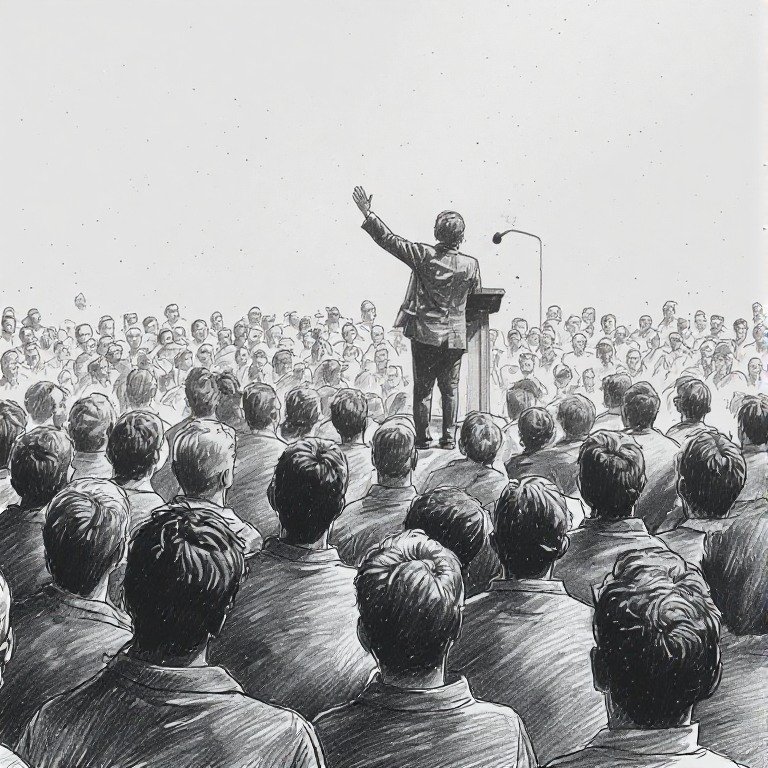
Most of us would probably say that lying is wrong. The problem is that we have become very creative at deciding what actually counts as a lie. We condemn the obvious falsehood while becoming much more comfortable with exaggeration, selective facts, misleading impressions, strategic silence, and carefully chosen words that allow us to deceive without technically saying something false. We may tell ourselves that as long as every individual sentence can somehow be defended, we have remained honest.
The ninth commandment reaches much farther than that. Scripture’s concern is not merely whether we avoided giving false testimony in a courtroom. It reaches into every way we use words to bend reality for selfish purposes. Episode 13 makes this point clearly: truth matters because it reflects the character of God Himself, and Christian speech should therefore look different from a culture increasingly shaped by image management, half-truths, manipulation, self-promotion, and spin.
I think this commandment becomes more uncomfortable the longer we sit with it. It is easy to say, “I don’t lie.” It is much harder to ask whether I sometimes make myself look better than I really am, leave out information that would change another person’s conclusion, repeat something I have not verified, tell a story in a way that makes someone else look worse, or protect my reputation by allowing people to believe something I know is incomplete. The ninth commandment is not simply asking whether we know how to avoid obvious lies. It asks whether we have actually learned to love truth.